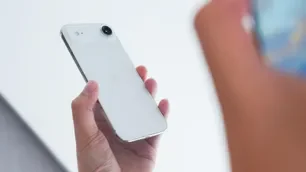
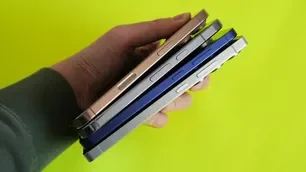
With CATL's Kirin solid-state battery achieving 1,500-kilometer EV range at 350Wh/kg and Gotion's all-solid-state battery hitting 400Wh/kg, both demonstrated in automotive applications in 2026, the question of when solid-state batteries will reach the iPhone has never been more pressing or more frequently asked. The answer, according to current industry analysis and manufacturing timelines, is not until 2032-2035 for mainstream consumer electronics, and the reasons illuminate the significant gap between proving a technology in the lab and manufacturing it at the scale and cost required for mass-market smartphones. The primary challenge is manufacturing yield: solid-state batteries require a solid electrolyte layer that must be deposited with atomic-level uniformity across millions of cells, and even small defects can create localized high-resistance regions that degrade performance or create safety risks. In automotive applications, where individual cells are large and can be individually tested and replaced, some yield loss is economically tolerable; in smartphones, where batteries must be cheap, thin, and produced in hundreds of millions of units, the yield requirements are far more stringent. The cost challenge is equally significant: solid-state cells currently cost several times more than conventional lithium-ion per watt-hour, a premium that the automotive market can absorb in luxury vehicles but that is incompatible with smartphone economics where the battery is a small fraction of the device's total cost. Stellantis road-testing solid-state cells in a Dodge Charger represents an important milestone, but it is a low-volume, high-cost proof of concept, not the mass production that would bring costs down to consumer electronics levels. Apple is known to be investing heavily in solid-state battery research, with patents related to solid electrolyte formulations and cell stacking methods, but the company's characteristic approach of waiting until a technology is mature enough for seamless integration suggests they will not adopt solid-state until it can be produced at iPhone-scale volumes with iPhone-acceptable costs. In the meantime, software optimization through iOS 26's AI-powered charging and hardware improvements like Qi2 magnetic alignment and more efficient processors continue to extend iPhone battery life through means other than chemistry breakthroughs. The sodium-ion batteries entering mass production through CATL and Gotion in 2026 offer a nearer-term chemistry improvement for consumer electronics, providing better safety and cold-weather performance at lower cost, though with lower energy density that makes them less suitable for the thin, space-constrained iPhone form factor.
Why your iPhone doesn't have solid-state batteries yet in 2026 - the real timeline revealed
DigitalTimes